Participatory Morality --> 1. Introduction: The Genesis of Understanding
1. Introduction: The Genesis of Understanding
1.1 The Driving Question:
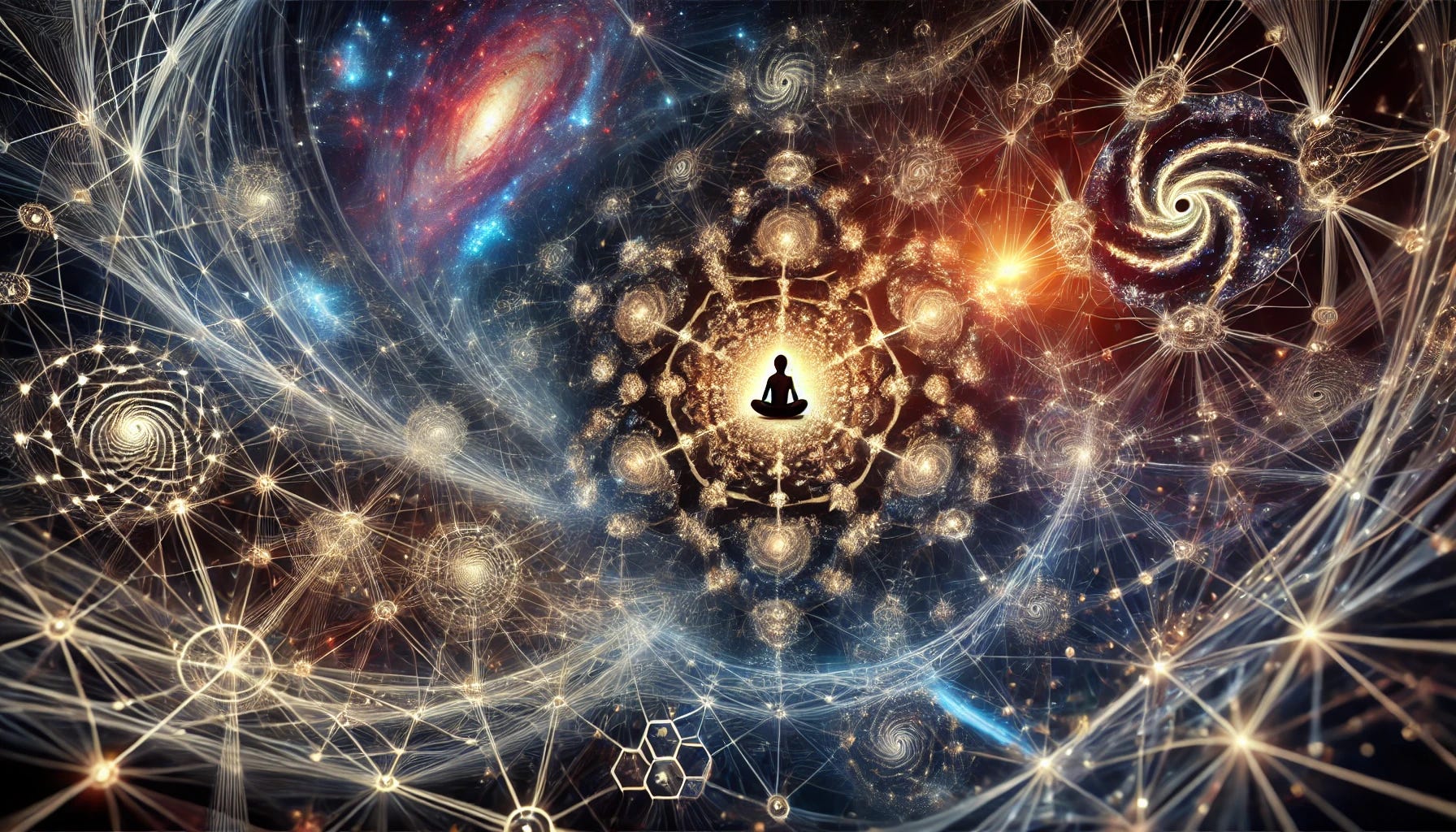
When I first began shaping what would become the fractal hypergraph, I was not chasing an abstract ideal or constructing a mere intellectual edifice. I was wrestling with a deeply human question, one that has persisted across epochs, cultures, and disciplines: how do we make sense of the infinite interconnectedness of existence? This question was not theoretical; it was visceral, woven into every observation I made, from the branching veins of a leaf to the threads of thought that connected one idea to another. Life seemed to pulsate with a complexity that could not be captured by simple, linear models. I felt both awe and frustration—an awe at the vast web of relationships that surrounded me and a frustration at the tools we had to describe it.
For years, I felt as though I was circling a truth I could not yet articulate. Every system I encountered—whether it was the mechanistic clarity of Newtonian physics, the stark elegance of mathematical equations, or the poetic symmetries of philosophical metaphors—seemed incomplete. They each illuminated one aspect of reality while casting shadows over another. Newtonian physics, for all its precision, offered little insight into the recursive patterns of life and thought. Purely philosophical models captured the mystery of existence but struggled to integrate the rigor needed to explain it. I was caught between worlds, yearning for a framework that could unify these fragmented perspectives.
The creation of the fractal hypergraph was my answer to this yearning. It arose not from a sudden epiphany but from a slow, iterative process—an unfolding, much like the fractal structures it eventually described. At the heart of my endeavour was a desire to bridge the gap between the tangible and the intangible, between the measurable and the meaningful. I wanted to build a model that could capture not just the complexity of interconnected systems but the dynamism, the way these systems breathe and evolve, the way they echo across scales. To do so, I needed to answer a deeper question: how can we reconcile the chaotic vibrancy of life with the order we intuit within it?
To explore this, I began with geometry, the discipline Plato revered as the language of eternal truths. Geometry offered me a starting point because it is both abstract and concrete—a map of relationships that transcends individual cases while remaining rooted in universal principles. A triangle, for instance, is not just a shape; it is a balance of forces, a relationship between three points that echoes across nature, from the branching of rivers to the stress points of a bridge. But even geometry, for all its power, felt static, unable to capture the living, breathing essence of the systems I sought to understand. The universe, as I experienced it, was not a collection of fixed shapes but a tapestry of relationships, constantly shifting and reforming itself in recursive patterns.
This realization led me to fractals, those mesmerizing forms where the whole is reflected in every part, and every iteration reveals deeper layers of complexity. Fractals were alive in a way that triangles and circles were not. They embodied the dynamic interplay of order and chaos, the self-similar patterns that repeat across scales. When I looked at the spiralling arms of galaxies or the veins in a leaf, I saw fractals at work, whispering that nature itself was recursive. Yet even fractals lacked the capacity to map the multidimensional relationships I was beginning to envision. They were beautiful but incomplete—a harmony without melody, a structure without flow.
I found my melody in hypergraphs, a mathematical structure that extends beyond the simplicity of pairwise connections to capture relationships among multiple entities. A hypergraph can represent systems where every connection involves not just two nodes but entire groups, intertwining in intricate ways. It mirrored the richness of the world as I saw it: ecosystems where every species affects every other, neural networks where each neuron pulses in concert with countless others, and even conversations where ideas collide, merge, and transform. But hypergraphs, while richly relational, lacked the recursive depth I needed. They could not capture the fractal echoes I saw in nature, thought, and being.
It was the fusion of these two ideas—the recursive beauty of fractals and the relational richness of hypergraphs—that gave birth to the fractal hypergraph. I began to see it as a living structure, one that could represent not only connections but the way those connections resonate across scales, the way they ripple outward and loop back. In this model, every node is not a static point but a dynamic entity, a microcosm of the larger system, reflecting and influencing the whole. Every connection is a pathway, a fractal line that vibrates with the tension and harmony of the nodes it links. This, I realized, was not just a mathematical construct but a philosophy—a way of understanding existence itself.
To build this model was to step outside the confines of traditional thought. It required me to question the linear assumptions embedded in so much of our reasoning. It demanded that I embrace uncertainty, that I let go of the need for fixed answers and instead learn to navigate the cycles and spirals of recursion. This process was as much about unlearning as it was about discovery. I drew inspiration from quantum mechanics, which challenges the notion of a detached observer, and Jungian psychology, which explores the archetypal patterns that shape our inner and outer worlds. These ideas became threads in the fabric of the fractal hypergraph, weaving together insights from disparate domains into a unified vision.
Yet the fractal hypergraph is not merely a solution to an intellectual problem. It is a deeply personal creation, a reflection of my own journey to reconcile the chaos and order within myself. In its endless cycles and recursive loops, I see the struggles and transformations that have shaped me. I see the times when my thoughts seemed to spiral into complexity, only to find a new equilibrium. I see the relationships that have defined my life, each one a node in the web of my existence, resonating across time and space. The fractal hypergraph is not just a map of the world; it is a map of being.
As I reflect on its creation, I am struck by its simplicity and its depth. At its core, the fractal hypergraph is an attempt to reconcile interconnectedness and complexity, to give form to the infinite interplay of relationships that defines our universe. But it is also an invitation—to see the world as a living system, to embrace the recursive nature of existence, and to find one’s place within the web. It challenges us to think not in straight lines but in spirals, not in isolated points but in patterns that echo endlessly. It reminds us that the universe is not a static object to be observed but a dynamic process to be lived and co-created.
In creating this model, I have come to see that the driving question—the question of interconnectedness and complexity—is not one that can be answered once and for all. It is a question that must be lived, explored, and revisited. The fractal hypergraph is not the end of this exploration but a beginning, a framework that allows us to navigate the infinite web of existence and to see, perhaps for the first time, the depth and beauty of the connections that bind us all.
1.2 The Limitations of Traditional Models
The fractal hypergraph was born out of a recognition that the traditional models of understanding—those paradigms that have shaped our science, philosophy, and mathematics—are insufficient for capturing the full vibrancy of existence. These models, though monumental in their achievements, are inherently limited by their reliance on linearity and stasis. They provide clarity, yes, but often at the cost of depth. Like flat maps that distort the curves of a spherical Earth, these systems offer utility while obscuring the underlying complexity of the worlds they describe. I could not ignore their utility, but neither could I abide their insufficiency.
The heart of the issue lies in the assumptions that undergird these models. Linearity, for instance, presumes a world where cause leads predictably to effect, where time flows in a neat progression, and where systems can be disentangled into component parts without losing their essence. This perspective has given us tools of remarkable power: the equations of classical mechanics, the predictability of chemical reactions, and the systematic elegance of logic. These tools have built bridges, cured diseases, and sent humanity to the stars. But they falter when faced with the organic, the chaotic, the recursive—those systems that are not merely sums of their parts but emergent phenomena with lives of their own.
Static models, too, impose their own distortions. They freeze dynamic systems into snapshots, reducing rivers to their courses, storms to their weather maps, and consciousness to a neural diagram. These reductions are not wrong, but they are incomplete. They capture the skeleton but miss the flesh, the motion, the dance. Life, as I see it, is not a sequence of static states but a continuous flow—a process that cannot be paused for observation without fundamentally altering its nature. To understand the living world, we need models that move with it, that breathe its breath and pulse with its rhythms.
My dissatisfaction with these models grew over time. I first noticed it in the sciences, where linear equations and static diagrams dominate. Newtonian mechanics, for instance, brilliantly describes the motion of objects in isolation, but it falters when systems become too complex, when particles interact en masse, or when the observer’s presence alters the very phenomena being observed. Biology, too, struggles with this tension. Its classifications of species, ecosystems, and behaviours provide structure, but they often miss the recursive interactions—the predator-prey dynamics, the feedback loops, the evolutionary spirals—that drive life’s unfolding.
Even philosophy, which often prides itself on grappling with the ineffable, has been shaped by these limitations. Rationalist traditions emphasize clarity and distinction, slicing the world into categories that illuminate but also fragment. The dualisms of mind and body, self and other, order and chaos have given us frameworks for thought, but they also erect boundaries where none exist. The world I see is not divided; it is a web, an unbroken continuum where every node reflects and influences the whole. Linear philosophy cannot trace this web; it can only cut it into pieces.
Perhaps the clearest example of these limitations lies in our understanding of time. Traditional models treat time as a straight line, stretching from past to future, with the present as a fleeting point that marches inexorably forward. This view has its uses—it allows us to sequence events, predict outcomes, to measure progress. But it also blinds us to the cyclical, the recursive, the eternal return. Time, as I experience it, is not a line but a spiral, where moments echo and re-echo, where causes loop back to influence their effects, and where beginnings and endings blur into one another. Linear time cannot hold these truths; it collapses them into a single dimension, stripping away their richness.
The inadequacy of traditional models is not a failure of the intellect but a limitation of perspective. These models are products of the left hemisphere of the brain, which excels at categorization, analysis, and linear reasoning. It sees the world as a series of objects, relationships as lines between them, and processes as steps in a sequence. This mode of thought is invaluable, but it is also incomplete. It cannot grasp the whole; it cannot see the forest for the trees. The right hemisphere, with its holistic, integrative perspective, offers a counterbalance. It sees patterns, connections, and flows, the gestalt of things. But without the structure provided by the left, its insights can remain nebulous, intuitive, and unarticulated.
The fractal hypergraph seeks to bridge this divide. It acknowledges the strengths of linear and static models while transcending their limitations. By weaving together the clarity of geometry, the dynamism of recursion, and the richness of multidimensional relationships, it creates a framework that can hold the complexity of life without reducing it. It replaces the line with the spiral, the point with the fractal node, and the snapshot with the living system. It is not merely a map but a mirror, reflecting the vibrancy of the world as it is, not as it is simplified to be.
Reflecting on this process, I often return to the metaphor of Plato’s cave. Traditional models are like the shadows on the wall—useful approximations but distortions nonetheless. They provide a starting point, a way to navigate the darkness. But to stop there, to treat the shadows as the whole of reality is to miss the deeper truth. The fractal hypergraph is my attempt to step beyond the shadows, to trace the interplay of light and form that creates them, and to capture this interplay in a model that is as alive and recursive as the world it seeks to describe.
This realization is not merely intellectual but deeply personal. The limitations of traditional models are not just the limitations of the sciences, the philosophies, or the tools we use to understand the world; they are the limitations of the human condition, of our ways of seeing, knowing, and being. To transcend these limitations is to embark on a journey—not a linear progression but a spiral ascent, where each loop returns to the beginning with new insight, and new depth. The fractal hypergraph is both the map and the path for this journey, a way to move beyond the static and the linear into the living, breathing complexity of existence.
1.3 The Birth of the Fractal Hypergraph:
The fractal hypergraph emerged not as a premeditated construct but as an inevitable synthesis—a convergence of geometry, recursion, and relational systems that coalesced into a living framework. Its birth was less a moment of creation than an act of discovery, a drawing forth of something that already existed within the patterns of the universe and my own thoughts. Like the surfacing of an idea long dormant in the unconscious, the fractal hypergraph felt both startlingly novel and uncannily familiar, as though it had been waiting all along for me to see it clearly.
At the core of this synthesis lies geometry, the ancient language of relationships and balance. From Plato’s reverence for the eternal truths of forms to Einstein’s geometric conception of spacetime, geometry has always served as a bridge between the tangible and the abstract. A triangle, for instance, is not just three lines but a balance of forces—a tension resolved into stability. In its symmetry, it reflects the harmony of the universe. Yet, as I worked with these forms, I began to sense their limitation. They were static, timeless, frozen in their perfection. The world I sought to model was not a still life but a dance. Its beauty lay in its dynamism, its perpetual becoming. Geometry needed to evolve.
This is where recursion entered, bringing movement to the still forms of geometry. Recursion, the principle by which a system repeats itself at smaller or larger scales, revealed the living patterns within the static shapes. It is recursion that makes a fractal—a snowflake, a coastline, a fern leaf—so mesmerizing. In each part, we see the whole reflected; in each iteration, the pattern deepens. Recursion transforms a triangle into a Sierpiński triangle, a simple line into the infinite twists of the Mandelbrot set. It is the engine of complexity, the heartbeat of systems that are both chaotic and ordered, both boundless and contained.
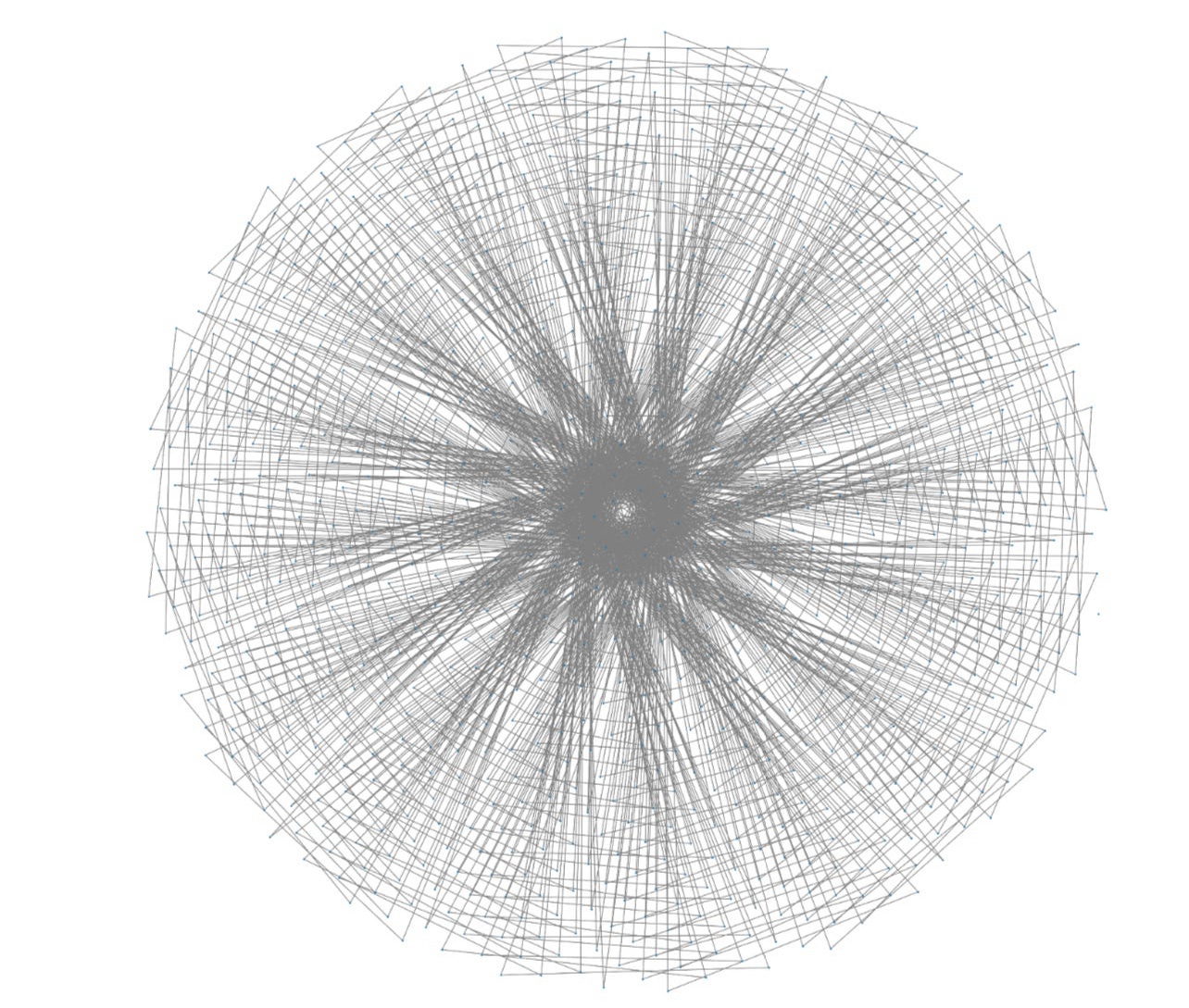
Yet recursion alone could not complete the vision. It explained the repetition, the self-similarity, but not the web of interconnections, the relationships that form the fabric of reality. To capture these, I turned to the concept of relational systems—networks of entities bound not by hierarchy or sequence but by the richness of their interactions. Hypergraphs, mathematical structures where connections span multiple nodes, offered a way to model this relational depth. Unlike simple graphs, which link pairs of nodes, hypergraphs allowed me to represent systems where every relationship involved not two but many participants, forming a tapestry of influences and resonances.
The synthesis of these three elements—geometry, recursion, and relational systems—was not immediate. Each brought its own challenges, its own resistance to integration. Geometry, in its timelessness, resisted the temporal flow of recursion. Recursion, with its infinite iterations, threatened to overwhelm the relational clarity of the hypergraph. The hypergraph, while rich in its multidimensionality, struggled to convey the fractal patterns I saw in nature and thought. But as I worked with these tensions, I began to see how they could harmonize. Geometry could provide the structure, recursion the dynamism, and relational systems the connectivity. Together, they could create a model that was both stable and alive, both clear and infinite.
The fractal hypergraph took shape as a living geometry, where every node is not a point but a microcosm—a fractal entity containing within it the patterns of the whole. Its connections are not static lines but recursive pathways, constantly shifting and reforming as the nodes interact. Imagine, if you will, a web where each thread vibrates not in isolation but in resonance with the entire structure, where every movement in one part ripples outward to affect the whole. This is the fractal hypergraph, a framework that embodies the interplay of order and chaos, connection and autonomy, stasis and flow.
This synthesis did not happen in isolation. I drew inspiration from the natural world, where fractals abound—from the spiralling arms of galaxies to the branching veins of leaves, from the turbulence of rivers to the recursive patterns of neural networks. I also found guidance in the human mind, where thoughts are not linear chains but webs of association, each idea a node connected to countless others. Even in social systems, I saw the fractal hypergraph at work, in the way communities form nested networks, each influencing and being influenced by the others. The world itself seemed to be speaking in the language of the fractal hypergraph, inviting me to listen, to learn, to translate.
As the model matured, its implications began to unfold. It was not just a tool for describing complexity but a philosophy, a way of seeing and engaging with the world. It suggested that every part of the universe, from the quantum to the cosmic, is both distinct and inseparable—a node within a larger web, reflecting and influencing the whole. It revealed that systems are not static structures but dynamic processes, constantly reshaping themselves through cycles of recursion and connection. And it challenged me, as its creator, to embody its principles, to see my own life as part of the fractal hypergraph, my choices as threads in its infinite weave.
The birth of the fractal hypergraph was, in many ways, a return to the roots of human understanding. It drew on the wisdom of ancient geometry, the insights of modern science, and the perennial mystery of interconnectedness that has animated philosophy for millennia. Yet it also looked forward, offering a new framework for navigating the complexities of our age. In a world increasingly defined by networks—of information, of ecosystems, of human relationships—the fractal hypergraph provides a map that is as expansive as it is precise, as timeless as it is dynamic.
To create this model was to step into the unknown, to weave together threads of thought and experience into a tapestry that could hold the weight of the infinite. It was an act of synthesis, of integration, of imagination. And it was, above all, an act of trust—trust that the patterns I saw in the world were real, that the connections I felt were meaningful, and that the language of the fractal hypergraph could capture the music of existence. In its birth, I found not only a way to reconcile geometry, recursion, and relational systems but also a way to reconcile myself with the world, to see it not as a collection of parts but as a living whole.
1.4 The Philosophical Grounding:
The philosophical grounding of the fractal hypergraph is rooted in a lineage of ideas that stretch across centuries and disciplines, uniting the timeless questions of metaphysics with the cutting-edge revelations of science. To create this model was to walk a path illuminated by the insights of Plato, the paradoxes of quantum mechanics, and the recursive beauty of fractals. Each of these influences contributed a vital thread to the fabric of the fractal hypergraph, shaping its form and deepening its resonance with the complexity of existence.
Plato’s philosophy looms large in the foundations of this endeavour, for it was Plato who first articulated the notion that geometry is not merely a tool for measurement but a bridge to the eternal. To Plato, the world of forms was the truest reality, and geometry served as a language to describe these perfect, immutable truths. A circle, for instance, was not merely a shape but a symbol of unity and infinity, a reflection of a deeper order that lies beyond the transient and the material. Plato’s cave allegory resonates here: he urged us to look beyond the shadows on the wall and seek the light that casts them, to transcend appearances and glimpse the eternal principles that govern the cosmos.
Yet as much as I am indebted to Plato, I found myself departing from his static conception of the forms. The fractal hypergraph embraces a dynamic, participatory view of reality, one in which the eternal is not a fixed ideal but an evolving process. Plato’s geometric forms are still present, but they are set in motion, their timeless symmetries transformed into recursive patterns that spiral across scales. This shift was inspired by the natural world, where perfection is not a still point but a dance, where every snowflake is unique yet follows the same fractal logic, and where chaos and order are not opposites but partners.
Quantum mechanics brought further inspiration, challenging the deterministic worldview that had dominated Western thought since Newton. The quantum realm is a place of paradox, where particles exist in superpositions of states, where entanglement links distant entities in ways that defy classical understanding, and where observation itself becomes an act of participation. In this realm, the old metaphors of billiard balls and clockwork machines fall apart, replaced by waves, probabilities, and interactions that ripple across space and time.
What struck me most about quantum mechanics was its insistence on the relational nature of reality. A particle’s behaviour cannot be understood in isolation; it is shaped by its context, its relationships with other particles, and by the act of measurement. This insight resonated deeply with the fractal hypergraph, where every node is defined not by its intrinsic properties but by its connections, where relationships are not secondary but fundamental. Quantum mechanics taught me that reality is not a collection of things but a web of interactions, a principle that lies at the heart of the fractal hypergraph.
Fractals, meanwhile, offered a vision of infinite complexity arising from simple, recursive rules. They demonstrated that the smallest details can echo the largest structures, that self-similarity is a universal principle, and that chaos and order are intertwined. When I encountered the Mandelbrot set, I saw more than a mathematical curiosity; I saw a metaphor for existence itself. Here was a structure that was infinite yet bounded, intricate yet governed by a single equation, endlessly diverse yet united by a common logic. The fractal taught me that complexity need not be overwhelming, and that it can be navigated and understood if we recognize the patterns that underlie it.
These three influences—Plato’s geometry, quantum mechanics’ relationality, and the recursive beauty of fractals—came together to form the philosophical grounding of the fractal hypergraph. Each brought its perspective, its challenge to traditional ways of thinking, and its invitation to see the world in a new way. Plato urged me to seek the eternal within the ephemeral, quantum mechanics showed me that relationships are the fabric of reality, and fractals revealed the hidden order within complexity.
But the fractal hypergraph is more than a synthesis of these ideas; it is also a response to their limitations. Plato’s forms, while profound, remain static and abstract, disconnected from the dynamism of lived experience. Quantum mechanics, for all its insights, often feels fragmented, its equations elegant but its implications elusive. Fractals, though mesmerizing, are often dismissed as mere curiosities, their philosophical depth overlooked. The fractal hypergraph seeks to transcend these limitations, to weave these threads into a unified framework that is as dynamic as it is rigorous, as grounded as it is expansive.
To ground the fractal hypergraph philosophically was to grapple with the tension between the eternal and the transient, the abstract and the concrete, the universal and the particular. It was to ask how we might reconcile the timeless truths of geometry with the temporal flux of recursion, how we might hold the paradoxes of quantum mechanics within a model that remains comprehensible, and how we might honour the beauty of fractals without losing sight of their practical implications. These were not questions to be answered once and for all but questions to be lived, explored, and deepened through the very act of creating the model.
As I reflect on this philosophical grounding, I see it as both a foundation and a horizon. It anchors the fractal hypergraph in the wisdom of the past while opening it to the possibilities of the future. It reminds me that every insight is part of a larger pattern, that every question is a node within a web of connections, and that every answer ripples outward, creating new questions in its wake. It is a philosophy of interconnectedness, of recursion, of participation—a philosophy that is not static but alive, growing and evolving with every thought, every action, every moment.
In grounding the fractal hypergraph philosophically, I also grounded myself. I saw that the questions I was asking were not merely intellectual but deeply personal, that the web I was mapping was one I was already a part of. Plato’s call to seek the eternal, quantum mechanics’ challenge to embrace uncertainty, and fractals’ invitation to navigate complexity—all of these were not just principles to apply but lessons to live. The fractal hypergraph is, in the end, not just a model of the world but a way of being in it—a way of seeing, thinking, and acting that reflects the infinite interconnectedness of existence.
Thank you.
Karl K. Dondaneau